Tansen and Sunwal Municipalities Strengthen Capacity for Inclusive, Gender-Responsive and Climate-Resilient Urban Planning
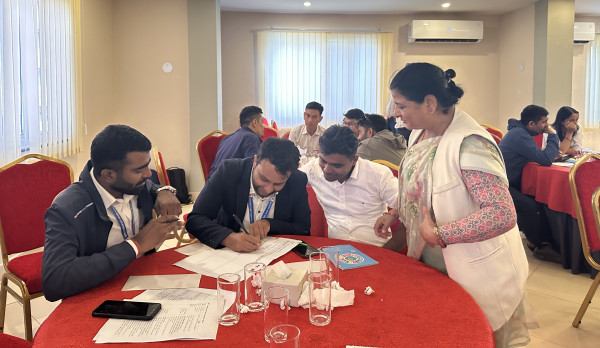
Tansen (Palpa) and Sunwal (Nawalparasi), Nepal, October 2026 — Under the Cities for Women (C4W) project, UN-Habitat, in collaboration with the Ministry of Infrastructure Development (MoID), the United Nations Office for Project Services (UNOPS) and Cities Alliance, organized two-day Training of Trainers (ToT) sessions to strengthen understanding and promote the effective implementation of the Municipal Urban Planning Guideline, 2083. The trainings were conducted in Tansen on 12–13 October 2026 and in Sunwal on 14–15 October 2026, bringing together a total of 83 participants, including 44 from Tansen and 39 from Sunwal.

Participants comprised elected representatives and municipal officials from both local governments, including mayors and deputy mayors, executive members, ward chairpersons, the Chief Administrative Officer, and heads and technical staff from planning, engineering, infrastructure, social development and environment units. Representatives from UN-Habitat and UNOPS also took part in the sessions. The trainings provided an opportunity to build institutional capacity, strengthen local ownership and equip municipal representatives and officials with the knowledge and skills needed to internalize and apply the Municipal Urban Planning Guideline, 2083 in their respective municipalities.

The training curriculum was based on the Municipal Urban Planning Guideline, 2083, endorsed by the Ministry of Infrastructure Development (MoID) for implementation across all local governments. Structured around nine sessions, the programme provided participants with a comprehensive understanding of the Guideline’s three phases and eight steps. The sessions covered key aspects of the urban planning process, beginning with urbanization trends and preparations for urban planning, including municipal self-assessment and the relevant policy, legal and institutional frameworks. Subsequent sessions explored inclusion and good governance in planning, long-term vision development, strategy formulation and prioritization, plan preparation, design and localization, project implementation, and monitoring and evaluation. The programme also addressed gender equality and social inclusion (GESI) and the effective management of urban planning data.
Adopting adult learning principles, the training combined presentations, facilitated discussions, group work and practical, module-based exercises. Participants were encouraged to contextualize the Guideline and apply its provisions to the specific planning needs and circumstances of their respective municipalities. Rather than focusing solely on familiarization with the Guideline, the ToT aimed to strengthen the practical capacity and confidence of elected representatives and municipal technical staff to integrate the Guideline into regular municipal planning processes and cascade the knowledge through subsequent capacity-development initiatives within their local governments.

Technical sessions were facilitated by experts in governance and urban planning, urban policy, and gender equality and social inclusion, alongside C4W project staff. The facilitators also documented key learning outcomes, emerging challenges and capacity-development needs to guide future technical assistance and follow-up support.
Reflecting on the training, Mayor Santosh Lal Shrestha of Tansen Municipality stated: “C4W is not only assisting local governments to develop public open spaces but is also expanding best practices across local governments. I expect the Guideline will contribute to inclusive and climate-resilient urban planning so that new plans are adaptable to these emerging issues.”
Mayor Bimala Aryal of Sunwal Municipality observed: “Most developed countries prioritize urban planning before implementing any project. In order to improve our current development practices, the Guideline endorsed by the MoID will definitely help us achieve effective urban planning.”
Chetnath Giri, Chief Administrative Officer of Tansen Municipality welcomed the initiative as a timely opportunity to strengthen municipal capacity and noted: “I have long expected capacity-development training of this kind. What I found is that C4W has contributed both practical and technical aspects of urban planning.”

Effective urban planning requires strong local ownership and a clear understanding of community needs and priorities. Through strengthening the capacity of municipal leadership and technical staff to lead inclusive, participatory and evidence-based planning processes, the Cities for Women project contributes to urban development that is more responsive to the needs of women, girls and marginalized groups, while promoting greater resilience to the impacts of climate change.