Service Continuity Through Restoration of Public Facilities in Earthquake Affected Municipalities in Jajarkot and Rukum West
Jajarkot | 9 June 2026
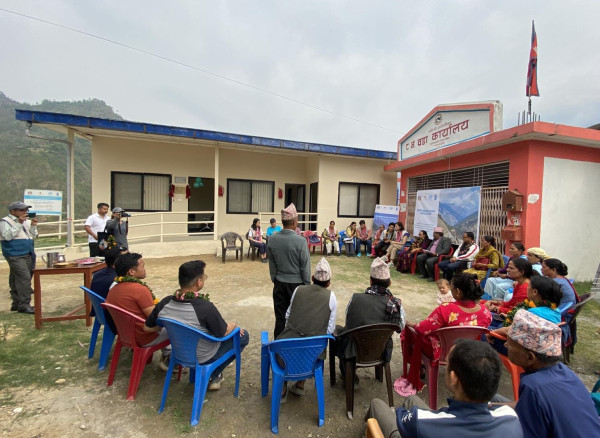
The Jajarkot Earthquake Recovery Project marked a major
milestone with the official handover of newly constructed prefabricated public
facilities in Jajarkot and Rukum West districts during a joint field visit on
27–28 May 2026. An Agriculture Development Unit in Ward No. 7, Nalgad
Municipality in Jajarkot, and an Immunization Centre along with an extended
Ward Office in Ward No. 8 of Sanibheri Rural Municipality in Rukum West were
handed over to local government representatives.
These facilities will now help restore and sustain essential public services that were disrupted when the earthquake struck in November 2023. The handover ceremonies in both districts symbolized not only the rebuilding of physical infrastructure but also the restoration of hope, dignity, and continuity of services for affected communities.

The high-level delegation included Mr. Yasuharu Shinto,
Deputy Chief of Mission of the Embassy of Japan, and Ms. Kyoko Yokosuka,
Resident Representative of UNDP Nepal, alongside representatives from UN
agencies, local governments, and partner organizations.
During the visit, the delegation also observed a range of recovery interventions, including reconstructed government offices, market centres, common facility centres, cold storage facilities, irrigation canals, and other community-based recovery efforts across Bheri, Nalgad, and Barekot municipalities in Jajarkot, as well as Sanibheri and Aathbiskot municipalities in Rukum West. Through the Jajarkot Earthquake Recovery Project, UNDP Nepal and UN-Habitat Nepal, with support from the Government of Japan, are working beyond physical reconstruction to restore hope, dignity, and economic resilience in earthquake-affected communities across five municipalities in Jajarkot and Rukum West.
Mr. Yasuharu Shinto, Deputy Chief of Mission of the Embassy of Japan, expressed appreciation for the progress achieved through the collaboration between Japan and Nepal. He highlighted Japan’s committed to supporting long-term recovery and resilient development in earthquake-affected communities. Nepal's rich natural resources and development potential can create greater opportunities when combined with improved connectivity, resilient infrastructure, and strong local governance. He also emphasized that strengthening health services, livelihood opportunities, and market connectivity can further enhance economic recovery and local development in the region.

Ms. Kyoko Yokosuka, Resident Representative of UNDP Nepal,
highlighted the importance of partnership and community ownership in recovery
efforts. “The progress achieved in a short period reflects strong collaboration
among communities, local governments, UN agencies, and partner organizations.
Together, we are helping communities rebuild safer and more resilient futures,”
she noted. Ms. Yokosuka also appreciated the generosity of the people of Japan
through the Government of Japan and reaffirmed UNDP’s continued commitment to
supporting resilient recovery and long-term development in earthquake-affected
communities.
Local government representatives emphasized the importance of continued collaboration to sustain recovery efforts. Mr. Dambar Bahadur Rawat, Mayor of Nalgad Municipality, acknowledged that the scale of the earthquake exceeded local capacities and described the recovery project as one of the most impactful initiatives supporting vulnerable communities in the area.

Likewise, Ms. Kamala Roka Pun, Vice Chairperson of Sanibheri
Rural Municipality, reaffirmed the commitment of local governments and
communities to maintain and sustain the supported infrastructure and services.
Ms. Kaushila Oli, a Female Community Health Volunteer from
Ward No. 8 of Sanibheri Rural Municipality, said the newly established
immunization centre would greatly improve access to healthcare services for
women and children. “Previously, mothers had to travel long distances in
difficult conditions to access basic health services. Now, the community has a
safer and more accessible space for healthcare and community activities,” she
shared.
Similarly, Mr. Indra Gautam, Secretary of the Chepka
Irrigation Canal Users Committee in Nalgad Municipality, explained that the
rehabilitation of irrigation systems has helped revive agricultural activities
and strengthen local livelihoods.
The visit concluded with appreciation for the long-standing
partnership between Nepal and Japan, which continues to be strengthened through
cooperation and solidarity during times of crisis. Local governments,
communities, and beneficiaries reaffirmed their commitment to take ownership of
the supported infrastructure and ensure its sustainability and long-term
benefit for future generations.