Private Sector Engagement Key to Scaling Urban Ecosystem-based Adaptation in Kathmandu Valley
Kathmandu, Nepal | 12 June 2026
Government
agencies, municipalities, financial institutions, green businesses, and
development partners came together in Kathmandu to explore how stronger private
sector engagement can accelerate climate-resilient urban development through
Ecosystem-based Adaptation (EbA) in the Kathmandu Valley.
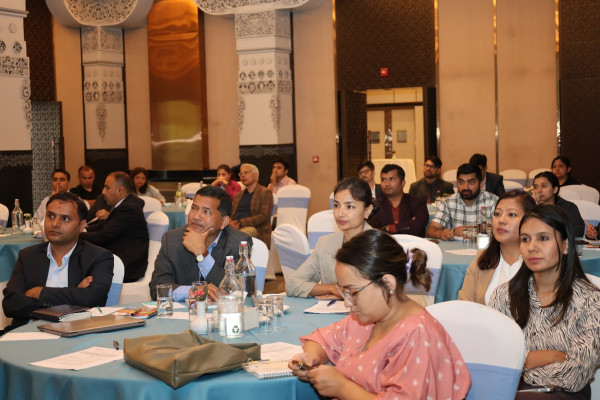
The policy dialogue, titled “Urban EbA: Policy Framework for Engagement of Private Sector,” was organized by the Kathmandu Valley Development Authority (KVDA) and UN-Habitat under the Urban Ecosystem-based Adaptation (Urban EbA) for Climate-Resilient Development in Kathmandu Valley project. The event brought together 48 participants representing government institutions, municipalities, banks, private enterprises, environmental organizations, and development partners.

Implemented
by the United Nations Environment Programme (UNEP), KVDA, and UN-Habitat with
funding from the Global Environment Facility (GEF) through UNEP, the Urban EbA
project aims to strengthen climate resilience across five municipalities in the
Kathmandu Valley by integrating ecosystem-based approaches into urban planning,
policies, and development practices.
Opening the
event, representatives from KVDA and UN-Habitat emphasized the growing climate
challenges facing the Kathmandu Valley, including urban flooding, water
scarcity, rising temperatures, and environmental degradation driven by rapid
urbanization. Participants highlighted that healthy ecosystems play a vital
role in reducing climate risks while improving the quality of urban life.
During the
technical sessions, experts presented the concept of Urban Ecosystem-based
Adaptation and its role in addressing urban climate vulnerabilities through
nature-based solutions such as urban forests, groundwater recharge systems,
wetland restoration, permeable pavements, rainwater harvesting, and green
public spaces.
Experts also discussed international experiences and Nepal’s evolving policy framework for Ecosystem-based Adaptation. Existing national policies, including the National Adaptation Plan, Climate Change Policy, National Urban Policy, and Local Government Operation Act, were identified as important entry points for mainstreaming Urban EbA into planning and investment processes.

A key focus
of the event was the role of the private sector in supporting climate
adaptation and sustainable urban growth. Participants highlighted that Urban
EbA presents not only environmental benefits but also economic opportunities
through green infrastructure, climate-resilient investments, sustainable
tourism, environmental services, and innovative nature-based enterprises.
The event featured interactive roundtable discussions organized into three thematic groups: government institutions and municipalities; banking institutions and the housing sector; and green businesses and environmental enterprises. Participants explored barriers and opportunities for scaling Urban EbA and identified practical actions to strengthen policy implementation, financing mechanisms, and public-private collaboration.

Discussions revealed that while Nepal has a strong policy foundation supporting climate adaptation, implementation challenges remain. Participants highlighted the need for technical standards for nature-based infrastructure, stronger institutional coordination, enhanced municipal capacity, and improved enforcement of climate-resilient planning and building regulations.

Representatives from financial institutions emphasized the importance of expanding green finance and developing dedicated financing mechanisms for nature-based solutions. Recommendations included blended finance models, climate-focused lending products, incentives for green investments, and stronger integration of climate resilience considerations into Environmental and Social Risk Management systems.

Green
businesses and environmental enterprises called for improved access to finance,
green certification systems, public-private partnerships, and greater
recognition of their contributions to ecosystem restoration, urban greening,
waste management, and circular economy initiatives.
In his remarks, Mr. Prakash Aryal, Deputy Development Commissioner of KVDA, stressed the importance of coordinated action among stakeholders and highlighted the need to protect and enhance multifunctional urban open spaces. He also underscored the importance of sustainable urban planning, environmentally responsible construction practices, and stronger collaboration between public institutions and private sector actors.

Closing the event, Ms. Sunita Shrestha, National Project Director of the Urban EbA Project at KVDA, thanked participants for their active engagement and reaffirmed the importance of private sector participation in planning, policy development, and implementation processes. She emphasized that mainstreaming Ecosystem-based Adaptation and Nature-based Solutions into urban development is essential for building a more resilient, sustainable, and liveable Kathmandu Valley.