Landless Communities’ Voices Brought to the Forefront in Dang: Marking the International Day for the Eradication of Poverty 2026
Every landless family has a story. Every story deserves to be heard.
Lamahi, Dang | 13 October 2026
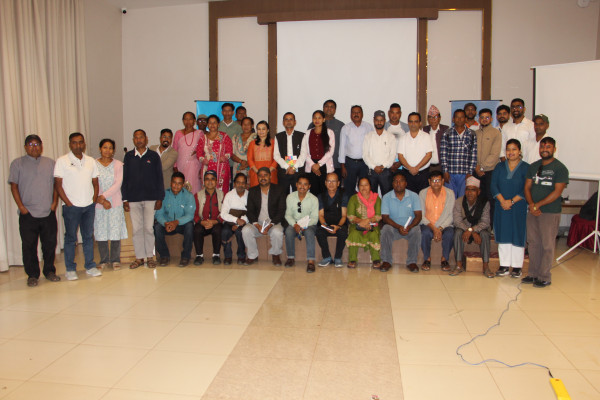
In recognition of the upcoming International Day for the Eradication of Poverty (17 October), the L4ACT Project, implemented by UN-Habitat with support from the Ministry of Agriculture, Food and Rural Affairs (MAFRA) of the Republic of Korea, organized a Media Interaction Programme in Lamahi, Dang.
Working in partnership with local governments in Lamahi
Municipality and Gadhawa, Rapti, and Rajpur Rural Municipalities of Dang
District, the project supports efforts to strengthen land tenure security,
address landlessness, improve local land governance, and promote climate-smart
agriculture and sustainable livelihood opportunities for vulnerable rural
communities, including near-landless sharecroppers, women, and young people.
The event brought together 11 journalists, local government representatives, ward chairs, and leaders of the District Land Rights Forum to hear the lived experiences of landless families, near-landless sharecroppers, and informal settlers, and to amplify their voices on land rights, poverty, and sustainable livelihoods.

The programme created a platform for four community members
to share their stories of struggle, resilience, and hope, highlighting how
secure land tenure can contribute to dignity, inclusion, improved livelihoods,
and poverty reduction.
The event began with a presentation by Bandana Sinha of UN-Habitat Nepal, who introduced the project and highlighted the significance of the International Day for the Eradication of Poverty, its 2026 theme, and its relevance to the project's work.

Remant Chaudhary of the Community Self-Reliance Centre
(CSRC) presented key interventions aimed at strengthening land tenure security,
including the Identification, Verification and Recordation (IVR) process,
efforts to address landlessness, and progress made in facilitating landless
households and informal settlers to obtain land ownership certificates. He also
outlined existing challenges and bottlenecks affecting these efforts.
Neelam Tripathi of CSRC highlighted the project's Climate-Smart Agriculture (CSA) interventions and livelihood support initiatives, demonstrating how these efforts have improved the livelihoods and resilience of near-landless households.

Four
Stories, One Shared Aspiration: A Dignified Life
The storytelling session showcased four unique experiences that reflected the realities of landlessness and insecure tenure while illustrating the transformative potential of secure land rights and sustainable livelihood opportunities in addressing poverty.

Bhicchu
Kami: From Landlessness to Land Ownership
Bhicchu
Kami, a formerly landless member of the Dalit community, shared his journey
towards securing a land ownership certificate. His experience demonstrated the
profound significance of land tenure security in providing recognition,
stability, and hope for a more secure future.
He
reflected on how difficult it was to believe that he had finally become the
owner of land that his family had cultivated for generations. For him, land
ownership is not only about security but also about dignity. He emphasized that
his children can now dream of a better future without the constant fear of
eviction.
Samsung
Giri: Waiting for the Security of Land Ownership
Samsung
Giri, who remains landless and is awaiting a land ownership certificate, shared
the uncertainty faced by families whose access to secure land tenure remains
unresolved.
He
described how landlessness forced his grandfather, father, and now himself to
move repeatedly, often facing eviction and instability. His story highlighted
the importance of secure land rights in reducing vulnerability and building
resilience. It also underscored the urgent need for timely and responsive
action to address landlessness.
Dewali
Chaudhary: From Brick Kiln Labour to Climate-Smart Agriculture
Dewali
Chaudhary, a landless sharecropper, shared how support from the project helped
transform her livelihood through Climate-Smart Agriculture.
With
project support, she was able to move away from labour-intensive work in a
brick kiln, which exposed her to significant health risks and hardships, and
engage in climate-smart farming practices as a lead woman farmer. Her
experience demonstrated how livelihood opportunities can strengthen resilience,
enhance women's economic participation, and create pathways toward sustainable
development.
Dilmaya
Dangi: Living with the Uncertainty of Informal Settlement
Dilmaya
Dangi, an informal settler awaiting a land ownership certificate, spoke about
the challenges of living without secure land tenure.
Her
story highlighted how unresolved landlessness affects families across
generations, limiting opportunities and creating persistent uncertainty. Her
experience reinforced the importance of inclusive and sustainable solutions
that provide long-term security for vulnerable households.
Together, these stories demonstrated that landlessness is not merely an issue of land ownership. It is also closely linked to economic insecurity, social exclusion, limited livelihood opportunities, and the ability of families to live with dignity and plan for their future.

Media
and Local Governments: Key Partners in Addressing Landlessness
A
discussion session following the storytelling programme highlighted the
critical role of the media, local governments, and land rights advocates in
addressing landlessness, policy gaps, and delays in land ownership
certification processes. Participants emphasized how collaborative efforts can
contribute to secure livelihoods, adequate housing, improved land governance,
and the reduction of multidimensional poverty.
Journalists
and representatives of the District Land Rights Forum stressed the importance
of sustained media engagement to bring the concerns of landless communities
into public discourse, strengthen advocacy efforts, and encourage timely action
by responsible authorities.
Bhaktu
Chaudhary, Ward Chair of Gadhawa-4, shared his experience of working closely
with the municipality, survey teams, and project staff to ensure the timely
inclusion of landless households and informal settlers in the IVR process. He
highlighted the importance of verification and documentation efforts in
supporting land ownership claims and noted that many landless families are now
hopeful that secure land tenure is within reach.
Senior
journalist and former Kantipur correspondent K.P. Ghimire emphasized the
responsibility of the media to remain vigilant and responsive in reporting on
the multifaceted impacts of delayed government processes and inaction on the
lives of landless families and sharecroppers. He encouraged journalists to
become persistent voices for those whose concerns often go unheard.
Srijana
Chaudhary, Chairperson of the District Land Rights Forum, emphasized the
continued need for advocacy, community mobilization, and agency-building among
landless households and informal settlers to ensure their voices are heard and
their rights recognized.
Shova
Ram Rijal, Chief Administrative Officer of Rajpur Rural Municipality,
highlighted the importance of localizing land governance mechanisms. He
emphasized the need to empower local governments to respond effectively and
work toward sustainable solutions that address the links between landlessness
and multidimensional poverty.
As
the world observes the International Day for the Eradication of Poverty on 17
October, the stories and discussions shared during the programme serve as a
powerful reminder that ending poverty requires more than economic assistance
alone. It also demands secure land tenure, equitable access to opportunities,
responsive institutions, and meaningful participation by affected communities
and other stakeholders.
When
the voices of landless families are heard, their struggles become visible,
their achievements inspire change, and their aspirations for a dignified life
help shape more inclusive, resilient, and sustainable communities.