Jalawati’s unyielding stands for Land and Environment
Dang | 10 September 2026
Jalawati
Chaudhary, 48, lives in Basantapur in Ward No. 3 of Rapti Rural Municipality.
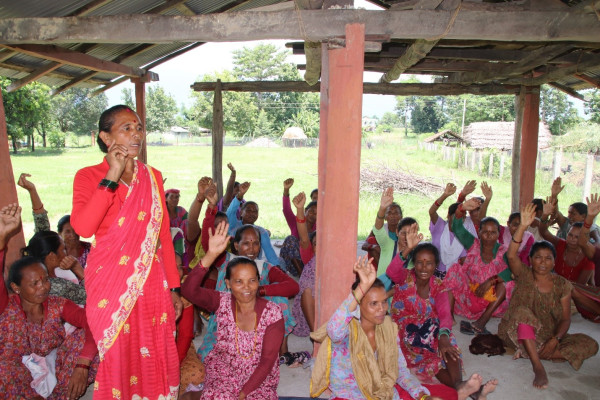
As Vice-Chairperson of the Switzerland Village Land Rights Forum (VLRF), she
helps lead a group of 51 members who meet every month. Each member contributes
NPR 50 to a dedicated fund to support their
land rights movement and advocacy.
In these gatherings,
they discuss about land rights and the Land Issue Resolving Committee, the
concerns of the freed Kamaiyas, issues related to environmental protection, and
the everyday joys and struggles of their community. Over time, the Forum has
become a space where members practice speaking, listening, and standing
together. This Village Land Rights Forum is one of the 103 VLRFs
having 3,444 members supported by the L4ACT project .
When this
Forum learned that preparations were underway to establish a crusher industry
on the public riverbank land on the eastern edge of the Basantapur village, the
members immediately recognized the danger. The industry would bring
environmental pollution, reduce soil fertility, damage roads, and harm
community health. They decided it had to be stopped.
At the
ward office, they discovered that a petition
with 85 signatures supporting the crusher had already been submitted. The Ward Chairperson
advised that a strong additional counter-petition with many more signatures
could help to justify prevention of any official recommendation. The Women’s
Development Group and the Land Rights Forum moved quickly. They collected 236
signatures of villagers and formally submitted a petition demanding that the
industry be not allowed on the public land.
She
says- after the petition was registered, officials came to her house and
pressured her to withdraw it. They offended her, belittled her, and threatened
her. She refused. “This is not just for me,” she told them. “It is for the
welfare of the whole village. Even if I lose my life, I will not withdraw the
petition.”
The Ward Office ultimately decided not to recommend the establishment of the crusher industry. The public riverbank land remains protected and available for villagers to graze their cattle.

Jalawati working on field
Before this struggle, not may paid any serious attention to the
opinion of Jalawati. Today she is regularly invited to village meetings and
discussions. Neighbors openly praise her: “You did a good job for the village.”
She reflects that joining the VLRF strengthened her courage to speak fearlessly
for land rights, deepened her leadership capacity, and hardened her
determination to struggle for the community’s welfare.
What began as a discussion in a monthly meeting became a
clear victory for local land rights and environmental protection. It was
achieved through organized collective action and the quiet, unyielding courage
of a woman who refused to be silenced.