From Sharecropping to Sustainable Prosperity
Gadhawa Rural Municipality | 7 October 2026
Sonu Chaudhary, a member
of the Sayapatri Farmer Group in Gadhawa-7 under the L4ACT Project, has
transformed his life from that of a
struggling informal settler and sharecropper farmer to a successful small-scale
commercial vegetable producer. His journey demonstrates how access to land, technical
support, and market opportunities can significantly improve the livelihoods of
vulnerable households.
Before the project interventions, Sonu lived as an informal settler without secure access to agricultural land. For more than 12 years, he depended on sharecropping arrangements, under which crop production was shared equally between the landowner and the farmer. Despite working hard, the production was often insufficient to meet his family's basic needs. To support his household, he relied on daily wage labor and occasionally worked as a rickshaw driver. However his income remained irregular and inadequate, leaving the family in a vulnerable economic situation. Vegetable cultivation was limited to a small kitchen garden that primarily supplied food for household consumption, generating little or no monitory income.

Through support from the
L4ACT Project, Sonu received a range of agricultural inputs, including climate-resilient seasonal
vegetable seeds, drought-resistant
paddy varieties (Sukkha Dhaan-3), plastic mulch, a tunnel house
for off-season vegetable production, insect traps for pest management, climate-friendly
agricultural tools such as a garden rake and cono weeder, and irrigation facilities. He also participated in technical training on improved vegetable
production practices.
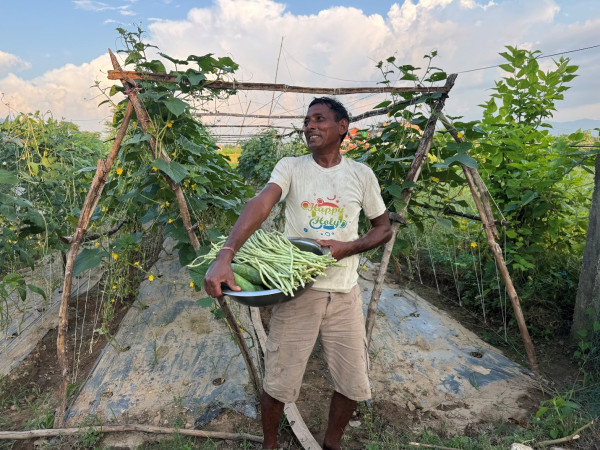
Motivated by these opportunities, Sonu expanded cultivation to approximately 8 Kattha of land, including 5 Kattha of Ailani (unregistered) land, 1 kattha of the backyard garden and an additional 2 Kattha converted from traditional cereal cultivation to vegetable production. He began growing variety of vegetables including yard-long beans, cucumbers, tomatoes, French beans, bottle gourds, and chillies, while applying improved farming practices including proper pruning, crop management and field sanitation.

The income from vegetable
farming has brought significant changes to his livelihood. Sonu estimates that
he earns around NPR 35,000 per month during the peak production season and
approximately NPR 15,000 per month during the rainy season, when he cultivates
paddy in the 5 Kattha of Ailani land. Overall, his annual income from farming
is estimated at around NPR 300,000. With the additional earnings, he was able
to purchase an electric vehicle (EV) scooter, which he uses to transport and
deliver fresh vegetables directly to customers and wholesalers. This has
reduced transportation challenges, expanded his market
reach, and created additional income opportunities.
Looking ahead, Sonu plans to further strengthen and expand his farming enterprise through off-season vegetable production using climate-smart agriculture techniques. Although he hopes to lease additional land in the future, current family circumstances limit his ability to expand. Nevertheless, he remains committed to maximizing production on his existing land by adopting improved technologies and enhanced crop management practices to increase productivity within the available area.
Today, Sonu has
established a more secure and sustainable livelihood for his family. His
transformation from a landless sharecropper and daily wage laborer to a small-scale
commercial vegetable producer serves as an inspiring example for other members
of the Farmer Group. His story demonstrates how targeted support, technical
knowledge, and improved market access can empower vulnerable households to
achieve greater
economic self-reliance and long-term
livelihood improvement.